.png)
.png)
Minerals, Minerals, Minerals

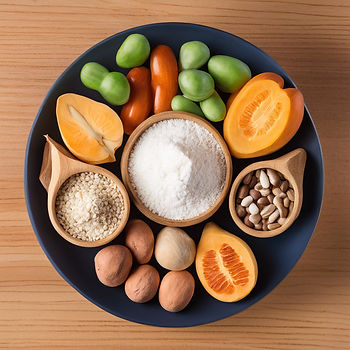
Ever wondered what your hair can reveal about your health? 🤔 A Hair Tissue Mineral Analysis (HTMA) is more than just a mineral test—it’s a blueprint of your body’s biochemistry! Imagine getting a comprehensive look at your health through a simple hair sample. 💇♀️ Hair contains minerals deposited as it grows, and these deposits reflect your body’s mineral activity over the past 3-4 months. This amazing functional test can reveal which minerals your body needs and where you need the most support. Curious to see what your hair has to say about your health? 🧐 Don’t wait—take control of your wellness journey today!
Macro Minerals 🌟 Our bodies need these minerals in higher amounts than others, and today, we're diving into the wonders of Calcium (Ca) 🦴. Did you know that calcium is the most abundant mineral in our bodies? 99% of it is stored in our bones and teeth, making it a crucial structural element. But that's not all! Calcium: 💤 Eases insomnia 🌿 Regulates the passage of nutrients through cell walls ⚖️ Maintains pH balance 🥑 Supports fat digestion 🩸 Plays a vital role in blood clotting. Without enough calcium, our muscles wouldn’t contract correctly, and our nerves wouldn’t carry messages properly! It's even linked to emotional factors—imbalanced calcium can inhibit magnesium entrance into cells, creating a calcium "shell." If you’re not getting enough calcium from your diet, your body will draw from your bone reserves. While food should be your primary source of calcium, supplements can be handy if you’re struggling. My preferred brands are CanPrev, NFH, Designs for Health, or CytoMatrix. You can check out some brands at https://ca.fullscript.com/welcome/mynourishedlife

Magnesium has garnered much attention as a beneficial mineral and a popular supplement. It is sought after for its ability to alleviate muscle cramps, enhance sleep quality, manage stress, and support hormone health. However, its significance extends further; research indicates that magnesium is crucial for 600-800 enzymatic processes within the body. It plays a role in energy production, cell membrane permeability, sugar metabolism regulation (which may reduce sweet cravings), muscle relaxation, inflammation reduction, and serves as an intracellular mineral vital for heart health. Stress, prevalent at epidemic levels globally, depletes magnesium from cells, leading to deficiency, as noted by Dr. Rick Malter. Chronic stress exacerbates this effect, potentially leading to severe magnesium deficiency and increasing the risk of a fatal heart attack. Regular consumption of magnesium-rich foods is essential, and supplementation may be necessary. Foods like pumpkin seeds, chia seeds, quinoa, and almonds are excellent sources, each providing 80mg or more of magnesium per serving.
When people hear the word sodium, they often think of salt and are advised to avoid it. How

ever, while ultra-processed foods high in sodium should not be part of our diet, our bodies do require high-quality sodium. Sodium acts as a significant solvent in the body, dissolving various chemicals. It is regulated by the body's minerals and helps maintain fluid balance, pH, and blood pressure. Chronically high levels of sodium may lead to burnout, and stress can cause acute spikes in sodium levels. Symptoms of sodium deficiency may include fatigue, exhaustion, low stomach acid, low blood pressure, or headaches, while excess sodium may manifest as excitability, edema, and headaches. Therefore, consuming high-quality sodium is vital for the body's extracellular functions.
Potassium, a mineral often overlooked, plays a vital role in the body and has a significant relationship with sodium. As an intracellular mineral, potassium aids in regulating cell permeability through sodium pump action. It is crucial for carbohydrate metabolism, muscle function, and is linked to cortisol levels, earning it the reputation of an anti-stress mineral. Additionally, potassium is key in making cells more responsive to thyroid hormone. Symptoms of potassium deficiency may include heart palpitations, numbness, tingling, fatigue, low blood pressure, or hypoglycemia. Conversely, excess potassium may manifest as depression or shortness of breath. Consuming potassium-rich foods like avocados, bananas, white potatoes with skin, and coconut water can help balance sodium, calcium, and magnesium levels in the body.
In the end, minerals are a critical foundation to our everyday health. This blog post has only scratched the surface of the importance of minerals. If you are interested in doing a HTMA please reach out to me!
Your health is your wealth,
Kyla


Comments